
Successful research in Natural and Engineering Sciences in interdisciplinary and international teams requires creative scientists who can provide cross-disciplinary and intercultural competences. The vision of the GS EAM is to support the evolution of young doctoral researchers into a new generation of scientists capable to pursue careers at an executive level. The central aspect is the unique excellence of the individual doctoral project, imbedded into a training program in multidisciplinary research, international networking and soft skills development. Therefore, we encourage our students to develop their scientific and social skills, and we promote responsibility and cooperation at all levels.
We are looking for highly motivated, analytically thinking and creative students. Therefore we not only support structured doctoral programms at FAU in the area of “New Materials and Processes” but also offer guidance for all doctoral researchers within our FAU Research Priority.
GS EAM closely cooperates with other structured doctoral programs, such as DFG funded research training groups (iRTG CLINT, iRTG ParSciTech, iRTG ChemPrint, RTG FRASCAL, RTG 2495, RTG 2861, RTG 3103 and GSMS) and with the elite master program “Advanced Materials and Processes” (MAP), which is supported by the Elite Network of Bavaria (ENB). GS EAM offers MAP students contact with the people and the research topics of the Cluster of Excellence at an early stage in form of a junior membership at GS EAM. Workshops are usually open for all doctoral candidates within the framework of EAM including researchers in the associated RTGs.
SPOKESPERSONS
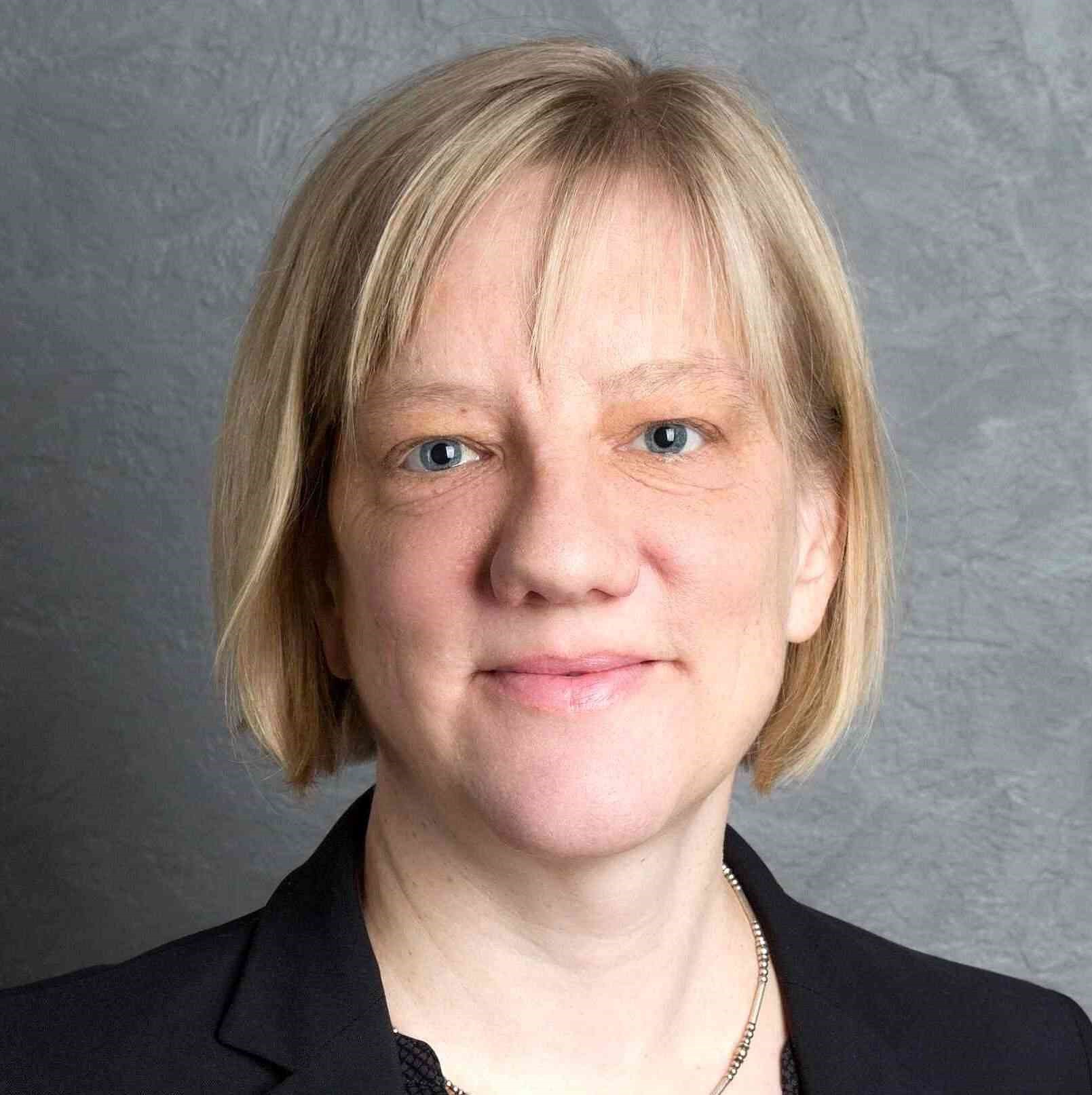
Prof. Dr. Janina Maultzsch
Physics, Institute of Condensed Matter Physics
Chair of Experimental Physics
Projects:
The research at the Chair of Experimental Physics focuses on light-matter interaction in low-dimensional materials, such as graphene and related two-dimensional (2D) materials, carbon nanotubes, and semiconductor nanoparticles. Current projects include excitons and phonons in novel 2D materials and van-der-Waals heterostructures, twisted 2D layers and moiré-induced effects, Raman spectroscopy on functionalized carbon nanotubes, optical properties of core-shell nanoparticles, ab-initio computations of structural, vibrational, and optical properties of 2D materials.
What do you plan for GS EAM?
For the Graduate School, I wish that we continue offering excellent interdisciplinary education for doctoral researchers from the Faculty of Sciences and the Faculty of Engineering. Our goal is to establish the Graduate School as an umbrella for structured doctoral programs as well as for individual doctoral training, which provides attractive support and an inspiring environment for scientific and personal development.
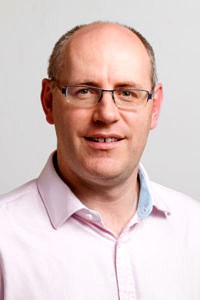
Prof. Robin N. Klupp Taylor, DPhil (Oxon)
Department of Chemical and Biological Engineering
Nanostructured Particles Research Group (Institute of Particle Technology)
https://www.nanodesign.forschung.fau.de/
Projects:
The focus of the Nanostructured Particles Research Group is on the synthesis, processing and application of complex functional particles using colloidal techniques, keeping a close eye on scalability and reproducibility of the processes used. Areas of particular interest include patchy and Janus particles synthesised using template-free heterogeneous nucleation and growth; particles with geometrically tuneable plasmon resonances; and structured particle thin films formed by self- and directed-assembly. The group is also involved in a wider collaboration initially established within the Cluster of Excellence EAM to design and build optimized nanostructured optical particles using a unique combination of numerical, physical and chemical approaches. From 2020 onwards this research undertaking was the focus of Collaborative Research Center (SFB) 1411 – Design of Particulate Products.
What do you plan for GS EAM:
I hope to be able to make a structured doctoral programme attractive and accessible for all doctoral researchers based in our Faculties who contribute in some way to the FAU research priority “New Materials and Processes”. In particular I am keen to involve groups and researchers who may not have been involved in EAM. I am also hoping to increase the cooperation between the existing third-party funded graduate programmes in our faculty and to provide equivalent opportunities (e.g. dual mentoring) to those doctoral researchers not involved in those programmes.
APPLICATION
Applications from are accepted throughout the year. Please send your application package electronically to the Graduate School Program Director (eam-graduateschool@fau.de).
Your application documents for the GS EAM should consist of
- Brief cover letter with your research interests
- Curriculum vitae
- Copies of university transcripts and certificates (bachelor’s and master’s degree or diploma)
- GS EAM mentoring agreement, incl. your choice of a major and a minor topic (form available via eam-graduateschool@fau.de or here)
- letter of acceptance from your supervisor with the names of your mentoring team members
- working title of your doctoral project
Your admission documents will be prepared following the review of your application by the GS EAM Steuerungskreis.
CONTACT
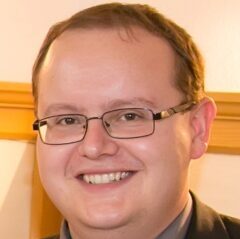
Dr. Andreas Späth
Program Director GS EAM